When a product carries high financial or operational value, time becomes part of its cost. A delayed medical instrument, semiconductor component, or precision machine part can interrupt production and damage customer confidence. This is why is air freight preferred for high-value time-sensitive goods? The answer usually involves speed, control, visibility, and reduced exposure to long transit periods.
Air freight can move urgent shipments across continents within hours or a few days. Shorter transit times may reduce storage needs, inventory gaps, and handling opportunities. Experienced logistics teams also use tracking events, secure packaging, documented handovers, and temperature monitoring where required. A small electronics shipment may travel in a shock-resistant case, pass through controlled facilities, and reach a production site before the next shift begins. These details matter.
Speed alone is not enough.
Reliable air cargo planning requires accurate commercial documents, suitable insurance, verified carriers, and careful destination coordination. Customs information must be complete and consistent. Packaging should reflect the product’s weight, fragility, and environmental sensitivity. Professional providers review these points before booking, not after a problem appears.
Still, air freight is not flawless. Weather, capacity shortages, airport congestion, and documentation errors can create delays. It may also cost more than ocean or road transport. That trade-off deserves honest evaluation. For a valuable shipment facing a strict deadline, however, faster movement and stronger visibility can justify the premium. The best decision depends on urgency, product risk, route reliability, and the consequences of waiting.
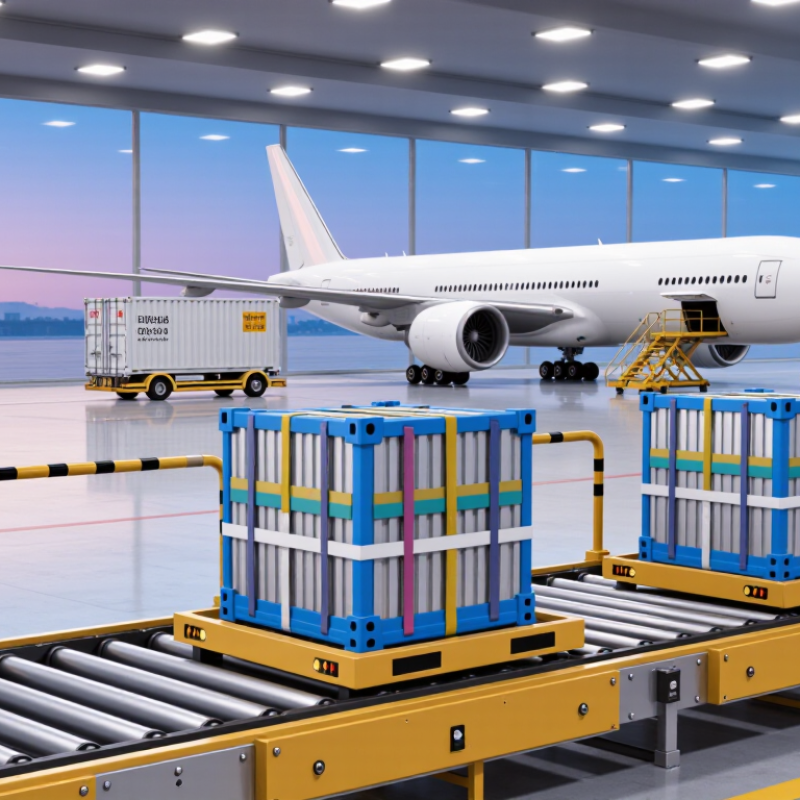
High-value, time-sensitive goods are defined by more than a high price tag. They combine financial exposure with a narrow delivery window. Examples include precision medical equipment, temperature-sensitive pharmaceuticals, urgent replacement parts, and limited-production electronics. A delay can trigger production downtime, missed clinical schedules, or contract penalties. Fragility also matters. A compact device may hold greater value than a full pallet of ordinary cargo.
IATA reports that air cargo represents about 35% of global trade value, while accounting for less than 1% of trade volume. This imbalance explains its role in sensitive supply chains. The 2024 IATA Air Cargo Market Analysis also recorded strong growth in global cargo demand, showing continued reliance on fast transport. Still, “urgent” should be measured, not assumed. Some shipments move by air simply because planning was late. That is expensive, and not always wise.
Tips: Define the real deadline first. Record product value, storage limits, handling risks, and recovery costs. Use data loggers for temperature-sensitive goods. Confirm packaging performance before dispatch. The World Bank’s Logistics Performance Index highlights tracking and timeliness as core logistics capabilities. Yet a perfect tracking screen cannot repair weak packaging. Test the complete route, including airport transfers and customs clearance. Reflect honestly: speed reduces transit time, but it does not remove every supply-chain risk.
For high-value, time-sensitive goods, air freight can compress a long supply chain into a predictable delivery window. A shipment leaving a manufacturing site in the morning may reach a regional distribution center within one day. That speed gives planners more than faster transit. It creates room to respond. When demand changes suddenly, teams can adjust inventory before shelves or production lines go empty. In practice, this depends on accurate booking details, secure handling, and clear handoffs. Small errors matter.
Air transport also improves supply chain visibility when shipments are monitored across each transfer point. Time-stamped scans can show whether cargo has departed, arrived, or missed a connection. Operations teams can then reroute replenishment, notify customers, or revise labor schedules before delays spread. For valuable cargo, controlled airport processes and documented custody reduce unnecessary exposure. Packaging still needs to withstand vibration, temperature changes, and repeated loading. Fast transport cannot repair weak preparation.
Yet air freight is not automatically the best answer. It costs more, capacity can tighten during peak periods, and weather may disrupt carefully planned schedules. A practical decision compares product value, urgency, stockout risk, and available alternatives. Operational experience shows that planning can fail when teams focus only on flight time. The missed detail is often the handover between warehouse and forwarder. Better results come from shared cutoffs, verified documents, and a fallback routing plan. Not perfect. But more resilient.
Why Choose Air Freight for High Value Time Sensitive Goods?
Security Measures for Protecting Valuable Air Cargo
Air freight combines speed with layered security controls for valuable, time-sensitive shipments. Cargo teams verify documents, inspect packaging, and confirm the shipment’s identity before acceptance. Trained personnel restrict access to controlled handling areas. Every handoff matters. Clear chain-of-custody records show who received the cargo and when.
Secure packaging should resist impact, moisture, and unwanted opening during transit. Tamper-evident seals create visible warning signs if a package is disturbed. Tracking systems record key movements, while monitored storage reduces exposure between flights. For sensitive products, temperature and humidity data can support quality checks. Security is not only about theft prevention. It also protects condition, accuracy, and delivery integrity.
Operational reviews often reveal small gaps, such as an unreadable label or a missed scan. These details deserve attention. No control is perfect, and procedures can become routine. Regular staff training, access audits, and documented escalation steps help reduce that risk. Unusual delays should trigger a prompt review, not assumptions. A practical security plan also includes backup routing, secure temporary storage, and verified contacts at each transfer point. Careful preparation gives high-value cargo a stronger chance of arriving safely, visibly intact, and within its required delivery window.
For high-value, time-sensitive goods, air freight converts distance into a shorter risk window. IATA reports that air cargo carries about 35% of global trade value, while representing less than 1% of trade volume (IATA, 2023). That imbalance matters for electronics, medical equipment, precision parts, and urgent replacement items. Faster transit can reduce inventory holding costs, financing exposure, and the consequences of a missed production deadline. Time is the product.
Cost remains more complicated than the freight rate. A proper comparison should include packaging, insurance, customs handling, security screening, and capital tied up in stock. Air transport may cost more per kilogram, but smaller safety inventories can offset part of the premium. The calculation is imperfect. Demand changes, fuel surcharges, and airport congestion can quickly alter the result. The World Bank’s Logistics Performance Index 2023 found that only about 60% of international shipments arrive within their expected delivery time, showing why buffers still matter.
Reliability depends on service design, not speed alone. Choose clear cut-off times, shipment-level tracking, documented handovers, and suitable temperature or shock controls. Split shipments can protect against one missed connection, although they add handling complexity. Service quality should also include responsive exception management and accurate customs documents. IATA’s Cargo iQ standards emphasize milestone monitoring across the transport journey. Those controls improve visibility, but they cannot eliminate weather delays or capacity shortages. A credible air-freight plan therefore compares total landed cost, measurable service performance, and the financial impact of delay.
| Evaluation Dimension | Air Freight | Ocean Freight | Typical Business Impact | Recommended Consideration |
|---|---|---|---|---|
| Typical Transit Time | 1–5 days airport-to-airport; approximately 3–10 days door-to-door | 20–45 days port-to-port; often 30–60 days door-to-door | Faster delivery reduces stock-out risk and supports urgent customer orders. | Use air freight when delay costs exceed the freight premium. |
| Indicative Transport Cost | Commonly priced by chargeable weight; often about 4–10 times the ocean cost per kilogram. | Generally lower per kilogram, especially for large-volume, non-urgent cargo. | Higher freight spend can be offset by lower inventory and capital-holding costs. | Compare total landed cost, not transport price alone. |
| Value-to-Weight Suitability | Strong fit for compact, high-value goods such as precision components, medical devices, and luxury products. | More suitable for heavy, bulky, and lower-value goods. | Transport cost represents a smaller percentage of the product value for high-value cargo. | Calculate freight cost as a percentage of cargo value before selecting the mode. |
| Schedule Reliability | Usually more frequent departures and shorter exposure to port congestion. | More exposed to port congestion, blank sailings, weather, and vessel schedule changes. | More predictable replenishment planning and fewer production interruptions. | Confirm cutoff times, flight availability, and contingency routes. |
| Security and Handling | Generally tighter airport security controls and shorter handling cycles. | Cargo may remain in containers and terminals for longer periods during transshipment. | Lower exposure time can reduce opportunities for theft, tampering, and handling damage. | Request sealed packaging, chain-of-custody records, and secure storage where needed. |
| Inventory and Working Capital | Shorter lead times can support lower safety stock and faster inventory turnover. | Longer lead times generally require more safety stock and earlier purchasing decisions. | Reduced capital tied up in goods in transit may partially offset higher freight costs. | Include financing, warehousing, insurance, and obsolescence costs in the comparison. |
| Shipment Visibility | Frequent milestone updates are commonly available from pickup through delivery. | Tracking is available, but updates may be less frequent during ocean transit. | Better visibility supports proactive customer communication and exception management. | Define required tracking milestones and escalation response times. |
| Temperature and Special Handling | Suitable for time-sensitive, temperature-controlled, fragile, and regulated shipments when properly packaged. | Can support controlled shipments but involves longer exposure to environmental and transit conditions. | Improved control helps protect product quality and reduce spoilage or compliance risk. | Verify packaging qualification, handling procedures, and regulatory documentation. |
| Customs and Documentation | Fast transit makes accurate commercial invoices, classifications, permits, and security data essential. | Documentation is also essential, but longer transit may provide more time to correct some issues before arrival. | Documentation errors can cause costly delays regardless of transport mode. | Use pre-clearance where available and conduct a document review before dispatch. |
| Carbon Consideration | Typically produces substantially higher emissions per tonne-kilometre than ocean transport. | Generally has a lower emissions intensity for large-volume shipments. | Environmental impact may affect procurement policies and customer commitments. | Reserve air freight for shipments where urgency, value, or risk justifies the impact. |
| Best-Fit Shipment Profile | High-value, compact, urgent, fragile, seasonal, or production-critical goods. | Large-volume, heavy, non-urgent, and cost-sensitive goods with stable demand forecasts. | The best mode depends on the cost of delay, cargo value, volume, and service requirements. | Consider a multimodal strategy: air for urgent units and ocean for planned replenishment. |
Note: Transit times and cost relationships are indicative planning ranges. Actual results vary by origin, destination, shipment size, season, fuel prices, customs requirements, routing, and service level.
Air freight is most suitable when delivery time affects the value, safety, or usefulness of the shipment. High-value electronics, precision instruments, medical equipment, and urgent replacement parts often fit this profile. A shorter transit period can reduce inventory gaps, production delays, and exposure to rough handling. Every day matters.
The decision should begin with the shipment’s real requirements, not urgency alone. Check the cargo’s dimensions, weight, packaging, temperature needs, insurance value, and delivery deadline. Air transport usually offers faster movement and more predictable schedules than ocean freight. However, airport transfers and customs processing still require careful planning. A missing document can delay a valuable shipment for hours or longer.
From practical shipping experience, strong packaging remains essential. A secure crate, shock protection, moisture control, and clear handling instructions can prevent avoidable damage. Tracking milestones should be reviewed from pickup through final delivery. Professional freight teams also confirm export documents, import requirements, and security procedures before dispatch. This reduces surprises, but it does not remove every risk. Air freight is not always the cheapest choice, and I have sometimes seen speed prioritized too quickly. A cost comparison should include storage, delay penalties, insurance, and possible production losses. When the cargo is compact, valuable, and genuinely time sensitive, the higher transport cost may be justified.
Air freight is often the most suitable option when delivery speed, schedule reliability, and reduced inventory exposure are more important than the lowest transportation cost. The ranges shown are indicative door-to-door transit times and may vary by route, customs clearance, service level, and seasonal conditions.
These goods combine significant financial exposure with a narrow delivery window. Examples include medical equipment, temperature-sensitive medicines, urgent replacement parts, and limited-production electronics. A compact device may be worth more than a full pallet of ordinary cargo.
Air freight suits shipments facing clinical deadlines, production stoppages, or serious stockout risks. A morning departure may reach a regional distribution center within one day. However, urgency should be measured carefully. Late planning alone does not always justify the cost.
Faster transit gives teams more time to adjust inventory and labor schedules. Time-stamped scans show departures, arrivals, and missed connections. Teams can then notify customers or arrange alternative routing. Small booking errors can still disrupt the whole plan.
Record the product value, delivery deadline, storage limits, handling risks, and recovery costs. Note temperature requirements and acceptable exposure times. Define the real deadline. “As soon as possible” is too vague.
Use suitable insulated packaging and data loggers to record temperature conditions. Confirm packaging performance before dispatch. Test airport transfers, temporary storage, and customs clearance. A tracking screen cannot repair damaged insulation.
Use tamper-evident seals, restricted handling areas, and documented custody records. Record who received the shipment and when. Secure storage reduces exposure between flights. No control is perfect.
Packaging must withstand impact, moisture, vibration, and repeated loading. Weak labels may cause missed scans or incorrect handling. Test the complete route, not only the warehouse departure. Preparation is sometimes overestimated.
Prepare an alternative route, secure temporary storage, and verified contacts at every transfer point. Set shared warehouse and forwarding cutoffs. Review unusual delays promptly. Do not rely on assumptions.
Compare product value, urgency, stockout risk, transit options, and possible recovery costs. Include peak-period capacity limits and weather disruption. Faster is not always better. The best choice may still be imperfect.
High-value, time-sensitive goods include products whose financial worth, limited shelf life, or urgent demand makes delays especially costly. This may involve precision equipment, critical components, medical supplies, or other items requiring rapid and dependable delivery. The question “why is air freight preferred for high-value time-sensitive goods” can be answered through its speed, global reach, and ability to support fast supply chain responses. Air transport helps businesses reduce transit times, respond to unexpected demand, and maintain tighter inventory levels.
Beyond speed, air freight offers structured handling, controlled access, shipment visibility, and carefully managed transfer procedures that help protect valuable cargo. Although it generally costs more than sea, rail, or road transportation, its reliability and shorter delivery window can justify the investment when delays could cause significant financial or operational loss. The most suitable shipping choice depends on cargo value, urgency, destination, security requirements, budget, and service availability.
Leoti Logistics