Ocean cargo can disappear between a busy terminal and a distant destination. A sealed container may arrive damaged, short, or not arrive at all. When this happens, knowing how to claim insurance for lost ocean freight cargo can protect your company from avoidable financial pressure. The process begins with evidence, not assumptions.
A practical claim usually depends on the insurance policy, bill of lading, commercial invoice, packing list, and transport records. Photographs can show broken seals, wet cartons, or empty container space. Tracking updates, terminal notices, and survey reports may also support the loss description. Keep every document. Small details matter.
Experience shows that many delays come from missed notice deadlines or unclear cargo values. The insurer may ask when the loss occurred, who controlled the shipment, and whether proper packing was used. Carrier liability and cargo insurance are different matters. They should not be treated as interchangeable. A qualified broker, surveyor, or claims professional can explain the policy wording and required steps. Still, professional advice does not replace careful review. Policies contain exclusions, deductibles, and conditions that may change the outcome.
The hardest part is often uncertainty. Was the cargo lost, misdelivered, or held for inspection? The answer affects the evidence and claim strategy. This guide explains practical steps, common mistakes, and reliable documentation methods. It also encourages a careful review of what went wrong. A claim is not merely paperwork. It is a structured effort to establish facts, meet deadlines, and seek a fair response under the policy.
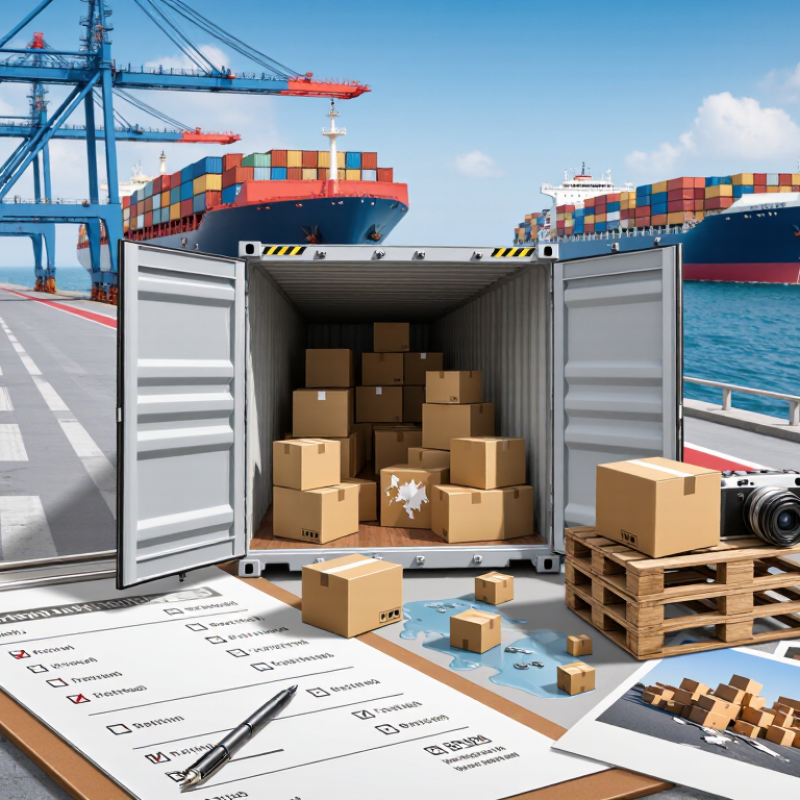
Ocean cargo insurance protects goods while they travel by sea, but coverage depends on the policy wording. A damaged container may not mean every item inside is covered. Insurers usually examine the cargo value, insured risks, packaging, route, and transport records. In practice, the invoice, packing list, bill of lading, and delivery receipt create the first evidence trail. Keep everything. Photos of torn wrapping, seawater marks, broken seals, and wet cartons can show when damage occurred. Details matter.
When cargo disappears or arrives short, notify the carrier, insurer, and relevant logistics parties promptly. Late notice can complicate an otherwise reasonable claim, although the policy and local rules control the actual deadline. Ask for a written shortage or damage report at delivery. If possible, request an independent survey before moving or discarding the goods. The survey should record counts, visible damage, container condition, and likely salvage value. Do not repair, sell, or destroy affected cargo without documented instructions. These steps preserve evidence, not guaranteed payment.
A claim generally explains what happened, what was lost, and how the amount was calculated. Include purchase records, freight charges, inspection findings, correspondence, and proof of ownership. Check deductibles, exclusions, limits, and conditions such as proper packing or notice requirements. Coverage may differ for total loss, partial loss, water damage, delay, or inherent defects. I have seen claims weakened by rushed estimates and vague descriptions. My own review can miss details, too. Recheck dates, quantities, currency, and signatures before submission. If the insurer asks for clarification, answer directly and keep copies of every exchange.
The answer is rarely based on the word “lost” alone. Ocean cargo may qualify for a claim when the shipment disappears, suffers physical damage, or becomes a constructive total loss under the policy. The cause matters. Covered events can include sinking, collision, heavy weather, fire, or mishandling during transit. Always check the insurance wording. Some policies cover “all risks,” while others list specific perils and exclusions.
Timing also matters. Report the loss as soon as it becomes reasonably clear. Delayed notice can complicate the review. Keep the sales invoice, packing list, transport document, survey report, tracking history, and delivery records together. Photos of damaged cartons help. So do container seals and temperature logs. Insurers usually need evidence connecting the loss to the insured voyage and declared cargo value. A carrier’s notice alone may not prove insurance coverage.
Be careful with partial delivery. Missing cartons may support a claim, but shortages should be recorded at delivery whenever possible. Concealed damage requires prompt inspection after opening. Policy conditions can differ sharply. A shipment may be delayed without being legally or commercially “lost.” That distinction is easy to overlook. In practice, incomplete records often create the greatest difficulty, not the loss itself. I would avoid assuming coverage before reviewing exclusions, deductibles, valuation terms, and notice requirements. A qualified claims professional or surveyor can help interpret uncertain facts without replacing the policy’s actual wording.
| Loss Situation | Typical Coverage Position | Key Qualification Factors | Recommended Evidence | Claim Priority |
|---|---|---|---|---|
| Container lost overboard during a documented sea incident | Often claimable under cargo insurance when accidental physical loss is covered. | The policy must be active; the goods must be within the insured voyage and not excluded; the loss must be supported by carrier or vessel records. | Insurance certificate, commercial invoice, packing list, bill of lading, incident report, and carrier correspondence. | High |
| Cargo declared missing at the destination | Potentially claimable, but insurers commonly require a formal tracing process before accepting a total-loss claim. | Proof of non-delivery, completion of carrier tracing, compliance with notice requirements, and no evidence of unauthorized release. | Delivery records, shortage or non-delivery certificate, written tracing results, arrival notices, and warehouse records. | Medium to High |
| Cargo released without the consignee's authorization | May be covered depending on the policy wording, custody arrangements, and applicable exclusions. | The claimant must show rightful ownership or financial interest and establish that the goods were not properly delivered. | Proof of authorization procedures, delivery order, release records, signed receipt, correspondence, and police report where appropriate. | Medium to High |
| Cargo stolen while in transit | Usually considered a covered peril under broad cargo policies, subject to security and exclusion clauses. | Theft must be demonstrated; the insured must follow security conditions and promptly notify relevant authorities and the insurer. | Police report, carrier incident report, seal records, security footage if available, inventory reconciliation, and valuation documents. | High |
| Cargo lost after an inadequate or inaccurate description | Coverage may be reduced or denied if the misdescription materially affects underwriting, risk assessment, or the premium. | The declared commodity, packaging, value, and transport conditions must match the actual shipment and policy declarations. | Sales invoice, packing list, booking details, customs documents, policy application, and photographs of the cargo. | Low to Medium |
| Loss caused by inherent vice or natural deterioration | Frequently excluded because the loss arises from the cargo's own properties rather than an external insured event. | The claimant must distinguish ordinary deterioration from an external event such as mishandling, temperature failure, or water ingress. | Pre-shipment inspection, temperature logs, survey report, photographs, packaging specifications, and handling records. | Low |
| Cargo abandoned because of delay or a market-price decline | Generally not treated as physical loss unless the policy specifically includes delay-related or market-risk coverage. | A financial loss alone is normally insufficient; the claimant must identify a covered physical event or a specific insured extension. | Delay notices, market records, disposal documents, policy endorsements, and evidence of any physical damage. | Low |
| Loss connected to war, seizure, sanctions, or political violence | Often excluded from standard cargo cover and may require a separate war-risk or political-risk extension. | The cause, location, date, sanctions exposure, and applicable territorial restrictions must be reviewed against the policy wording. | Official incident records, route details, vessel notices, policy endorsements, sanctions screening documents, and survey findings. | Low to Medium |
| Cargo lost after an uninsured voyage or policy expiry | Normally not covered if the loss occurred outside the policy period, insured voyage, or agreed transit conditions. | The loss date, attachment of cover, transit start and end points, and any warehouse or storage extension are decisive. | Insurance certificate, shipment timeline, bill of lading, warehouse receipts, and policy schedule. | Very Low |
| Loss with incomplete or late notice | The underlying loss may be covered, but delayed notice can make investigation difficult and may affect recovery rights. | Notice must follow the policy and transport contract; the claimant should avoid concealment, preserve evidence, and mitigate further loss. | Initial notice, dated emails, survey appointment, mitigation invoices, photographs, and all communications with the carrier. | Time-Sensitive |
Why Learn How to Claim Insurance for Lost Ocean Cargo?
When ocean cargo disappears, evidence often matters more than confidence. Start by preserving the bill of lading, commercial invoice, packing list, and purchase records. These documents establish what was shipped, its quantity, and its declared value. Keep container numbers, seal details, loading photos, tracking updates, and delivery records together. Small inconsistencies can slow a claim.
Ask the carrier or terminal for written loss notices, movement logs, and delivery confirmations. If damage is discovered, photograph the container, packaging, labels, and surrounding conditions before moving the goods. An independent cargo survey may provide stronger observations than an internal report. Record every conversation with dates and names. Memory fades quickly. A common mistake is relying on emails alone while ignoring policy deadlines and notice requirements. I would still question whether every document proves loss, rather than merely suggesting it.
Tips: Create a timeline from booking to the final expected delivery. Keep original files, not only screenshots. Compare the policy wording with the actual loss, including exclusions, deductibles, and valuation rules. Report the incident promptly, even when some facts remain unclear. Do not estimate casually; use invoices, repair quotations, or credible market records. If evidence is incomplete, say so plainly. Honest gaps are easier to address than polished contradictions.
Gathering evidence quickly is essential when cargo is lost or damaged at sea. The chart compares the written-notice periods for non-apparent cargo damage under three international carriage regimes. Always check the contract, applicable law, and insurer requirements before relying on a deadline.
Practical evidence to preserve includes the bill of lading, commercial invoice, packing list, survey report, photographs, container or seal records, delivery records, and written notices sent to the carrier and insurer. Notice periods shown are based on the Hague-Visby Rules, Hamburg Rules, and Rotterdam Rules.
A missing container creates more than a commercial loss. It creates a documentation problem. Learning the insurance claims process helps you respond before evidence disappears. The International Union of Marine Insurance reported global marine premiums of about US$38.9 billion in 2023. Cargo insurance represented roughly 57 percent of that market. The exposure is substantial.
Start by checking your policy, deductible, exclusions, and notice deadline. Then notify the insurer and carrier in writing. Describe the shipment, bill of lading, route, seal number, and suspected loss. Do not estimate casually. A wrong figure can weaken a valid claim. Preserve invoices, packing lists, loading photographs, tracking records, and delivery exceptions. Request a formal loss survey when appropriate. The surveyor may inspect damaged cartons, water marks, broken seals, or incomplete discharge records. Next, submit the claim form with a clear loss calculation. Keep every email and receipt in one dated file. An adjuster will compare your evidence with policy terms and transport records. Patience matters, although delays can feel unreasonable.
Tips: Photograph the container before opening it. Record the seal immediately. Ask for written confirmation of reported loss. Separate damaged goods from unaffected stock. Check currency calculations twice. A practical weakness remains: digital tracking may show location, but it rarely proves causation. That is why independent records still matter. A 2024 international shipping safety review recorded 26 large vessel losses during 2023, showing that rare events can still create complex cargo claims.
Why Learn How to Claim Insurance for Lost Ocean Cargo?
A lost ocean shipment can create confusion before anyone confirms what happened. The claim process becomes slower when records are incomplete or notices arrive late. Keep the transport contract, commercial invoice, packing list, and payment evidence together. Add the cargo description, quantity, value, and loading date. Small details matter.
Notify the insurer and relevant transport parties as soon as possible. Check the policy for notice periods, exclusions, deductibles, and required surveys. Do not discard damaged packaging or rewrite delivery records. Photograph the container, seals, labels, and storage area. Preserve emails and tracking updates. Clear evidence protects your position.
A practical claim file should show one timeline. Record each call, email, inspection, and response. Ask for written confirmation when documents are received. If a deadline is unclear, request guidance promptly from a qualified claims professional. Local rules and policy wording can affect available remedies.
No checklist is perfect. I would still recheck every date. A single incorrect date can raise avoidable questions. Sometimes the carrier’s explanation changes after further investigation, so keep your notes factual and measured. Avoid guessing the cause of loss. State what you know, what remains uncertain, and which documents support each point. This disciplined approach can reduce delays and help preserve your claim rights.
Keep the bill of lading, commercial invoice, packing list, and payment records. These documents show the cargo, quantity, shipment, and declared value. Small gaps matter.
Save container numbers, seal details, loading photographs, labels, and tracking records. Keep damaged packaging. Do not discard it.
Notify them in writing as soon as possible. Some policies require notice within a specific period. Late notice can create avoidable problems.
Include the shipment route, bill of lading, container number, seal number, and suspected loss. State confirmed facts clearly. Avoid guessing the cause.
An independent survey may provide stronger observations than an internal report. The surveyor can inspect broken seals, water marks, damaged cartons, or incomplete discharge records.
Use invoices, repair quotations, or reliable market records. Check currency calculations twice. Casual estimates may weaken an otherwise valid claim.
Common mistakes include ignoring policy deadlines and relying only on emails. Keep original files, not just screenshots. Record each call, inspection, and response.
Usually, tracking shows location but not causation. Independent records still matter. I would question whether every document truly proves loss.
Understanding how to claim insurance for lost ocean freight cargo can help shippers respond quickly and protect their financial interests when goods disappear, arrive incomplete, or are damaged during transit. This process begins with reviewing the insurance policy, shipment terms, exclusions, coverage limits, and reporting deadlines to determine whether the loss qualifies. Clear documentation is essential, including the bill of lading, commercial invoice, packing list, survey reports, delivery records, photographs, tracking details, and written notices from carriers or logistics providers.
A successful claim generally requires prompt notification, accurate loss descriptions, organized evidence, and careful completion of the insurer’s claim forms. Shippers should follow each step in the claims process, cooperate with inspections, and keep records of all communications and expenses. Common delays can result from late reporting, missing documents, unclear cargo values, or failure to preserve damaged goods for review. By acting methodically and understanding their policy rights, cargo owners can reduce unnecessary complications and improve the likelihood of receiving fair compensation.
Leoti Logistics